Municipality public sustainability officer
What this page covers
Municipality public sustainability officer
If you are responsible for your municipality’s sustainability agenda, you may be looking for practical ways to boost citizen recycling, make better use of existing collection points, and show visible progress without overextending limited budgets and teams.
A realistic first step is to map how residents already interact with recycling options such as Smart Sustainability Oasis centers, blue street bins, and mall drop-off points, then explore how a citizen-facing app and local partners could gently encourage higher use and provide engagement insights over time.
In brief
- You may be looking for ways to increase resident participation in plastic recycling, connect scattered drop-off points into a clearer citizen journey, and align these efforts with your city’s wider sustainability and ESG narrative.
- A good fit can be city-branded sustainability missions that build on existing infrastructure like Smart Sustainability Oasis kiosks, blue bins, and mall drop-off centers, supported by digital tools that reward residents and make their positive actions more visible.
- Before you start, it helps to clarify which collection schemes operate in your emirate, what data you can access from partners, and what level of citizen engagement and reporting your internal stakeholders expect from a new initiative.
What to do
As a municipality public sustainability officer in the UAE, you work in a landscape where multiple actors already provide recycling options: Dubai Municipality’s Smart Sustainability Oasis centers, Bee’ah’s blue bins in Sharjah, Averda-operated centers in Abu Dhabi and Al Ain, and drop-off points in malls across Ras Al Khaimah. Your challenge is less about creating infrastructure from scratch and more about helping residents find and use what already exists, while you keep an eye on city-level goals and reporting needs.
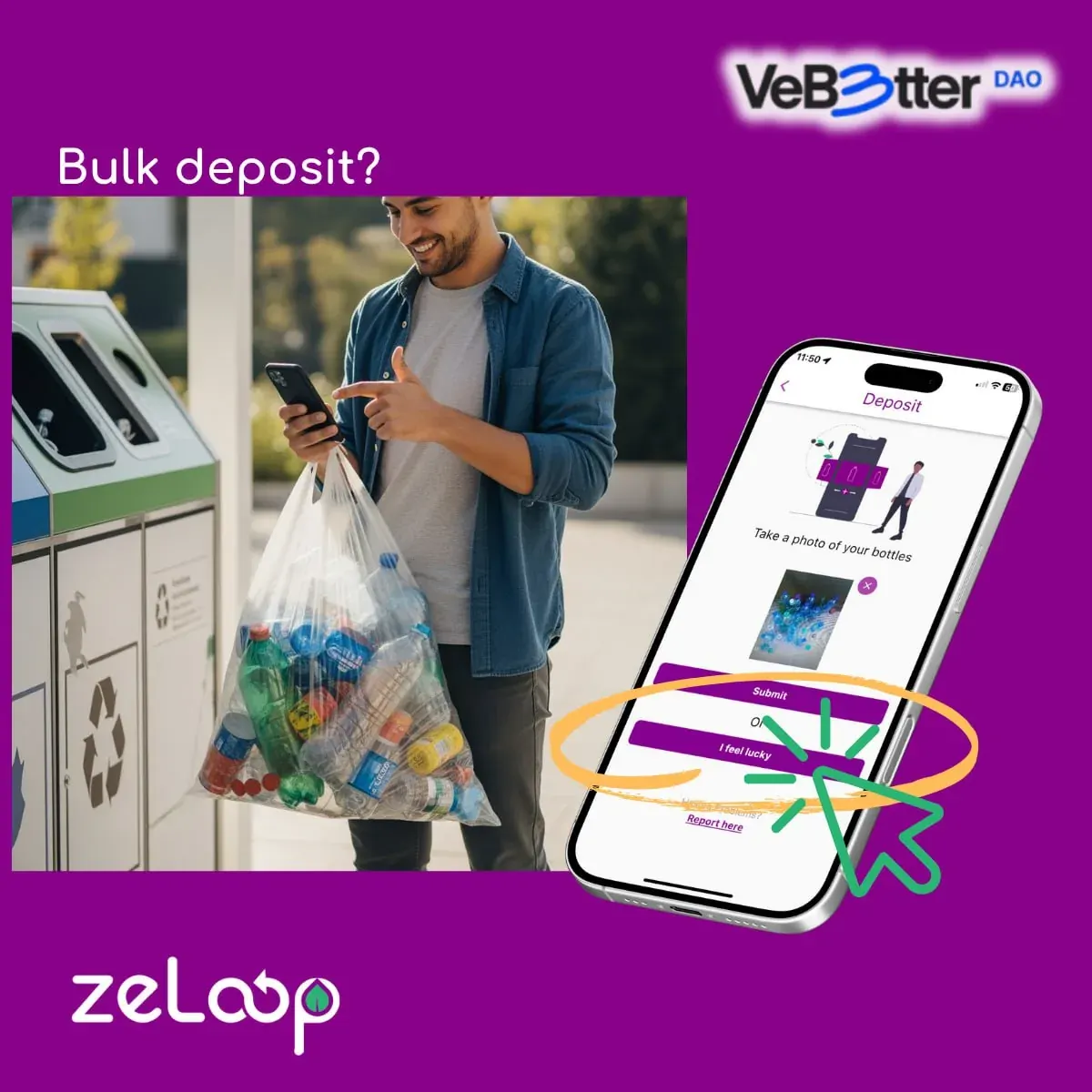
One way to approach this is to connect physical infrastructure with citizen engagement formats. Smart Sustainability Oasis kiosks already display eco-messages on-screen, and apps such as ZeLoop and Recapp show that residents respond to rewards for returning plastic bottles from home or on the go. Building on these patterns, you can design city-branded missions that guide people to nearby drop-off centers, encourage repeat behaviour, and highlight the environmental value of their actions. Education and advocacy elements can strengthen your city’s sustainability branding and support broader CSR and ESG narratives without requiring heavy new capital investments.
To move carefully, you can start with a pilot that focuses on a limited set of locations, such as a cluster of Smart Sustainability Oasis centers or a group of malls with existing drop-off points. In parallel, you can explore how to access aggregated data from operators or digital tools, so you can track participation and plastic collection volumes at a high level. This step-by-step approach lets you test citizen response, refine communication, and build an internal case for scaling, while staying aligned with procurement constraints and existing partnerships.
What to keep in mind
Any initiative you launch will sit within an ecosystem of municipal departments, private waste firms, and community groups. Results depend on how well you coordinate with operators of Smart Sustainability Oasis centers, blue bin networks, and collection apps, and on how residents respond to the incentives and messages you choose to promote.
There are practical limits to what a single program can achieve. Budget and procurement processes may slow down new launches, and data access can be constrained by how partners collect and share information on plastic volumes and participation. Not every neighbourhood will have the same density of drop-off points, and some residents may prefer existing services such as home collection over new engagement formats.
Despite these constraints, starting with a focused, city-branded engagement effort around known collection points is a reasonable step. It allows you to build on infrastructure that is already in place across Dubai, Sharjah, Abu Dhabi, Al Ain, Al Dhafrah, and Ras Al Khaimah, while you gather evidence on citizen behaviour and refine your sustainability messaging before committing to wider roll-out.