Waste management in uae
What this page covers
Waste management in uae
Waste management in the UAE is changing fast as the country responds to high waste generation and historically low recycling rates. Residents produce around 1.8 kg of waste per person each day, adding up to millions of tonnes every year, so improving collection, sorting and recycling is now a national priority.
Federal regulations promote integrated waste management and more standardised disposal practices, while each emirate runs its own system. Abu Dhabi’s Tadweer, Dubai’s Integrated Waste Management Master Plan and Sharjah’s Bee’ah all focus on diverting waste from landfill, boosting recycling, and expanding waste‑to‑energy and plastic reduction initiatives across the UAE.
In brief
- UAE residents are among the world’s highest per‑capita waste generators, so authorities are expanding waste management, recycling and waste‑to‑energy projects to cut landfill use and environmental impact.
- Each emirate manages waste through its own operator and plans, such as Tadweer in Abu Dhabi, Dubai’s Integrated Waste Management Master Plan and Bee’ah in Sharjah, all aiming to increase recycling and improve collection systems.
- Digital waste solutions in the UAE increasingly reward responsible behaviour, offering services such as door‑to‑door collection of recyclables, online access to recycling bins and reward programmes that encourage households and businesses to sort their waste.
What to do
Waste management in the UAE combines federal direction with emirate‑level systems. National resolutions on integrated waste management set the framework for safer disposal and lower risks to human health, while local authorities deliver concrete projects. Abu Dhabi’s Tadweer oversees policy and contracts, Dubai follows an Integrated Waste Management Master Plan targeting zero landfill over a 20‑year horizon, and Sharjah’s Bee’ah has set ambitious landfill diversion goals supported by two‑stream collection.
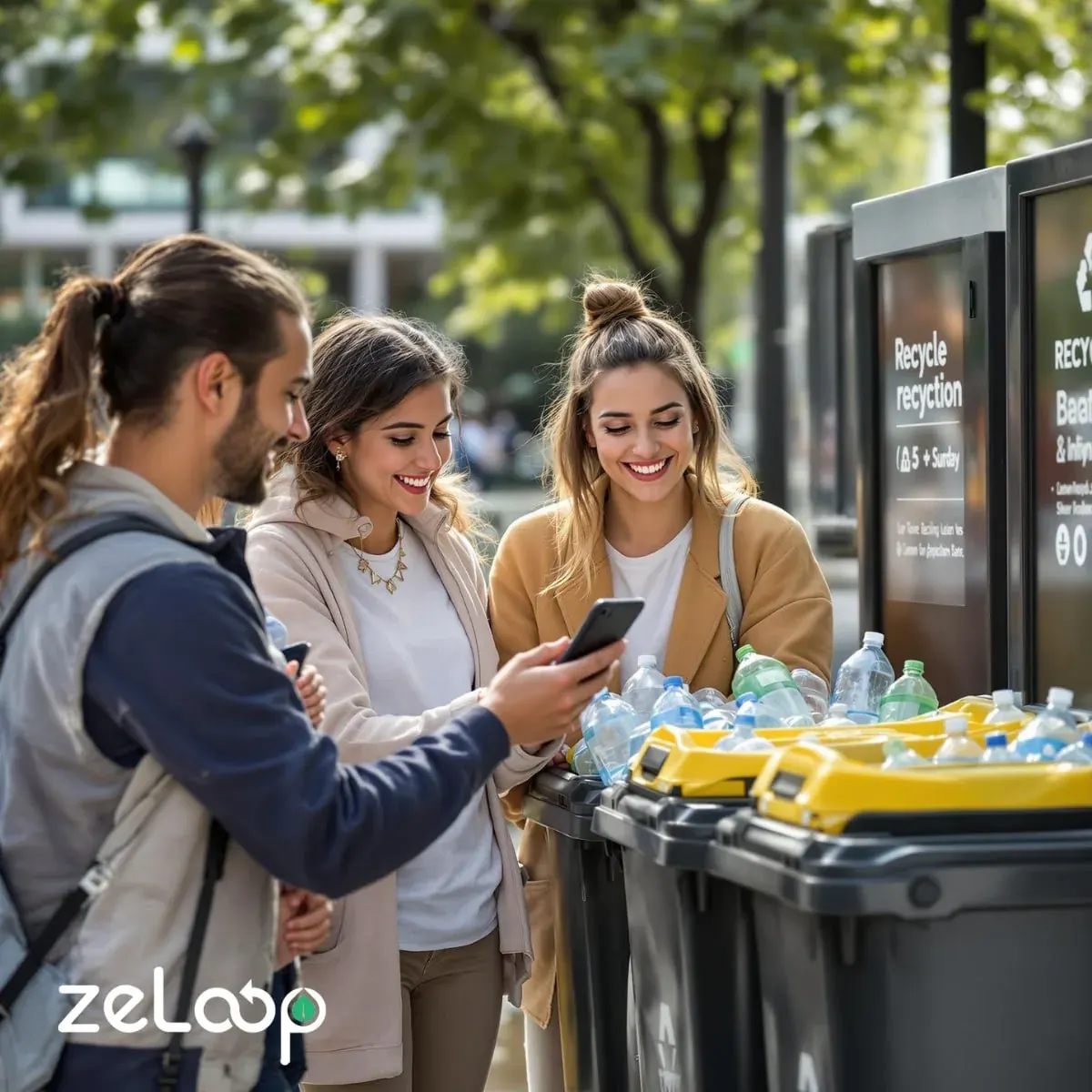
For households and businesses, practical waste management increasingly means separating recyclables and using the growing network of collection options. Across the UAE, accepted materials typically include paper, cardboard, metals, glass, plastics such as PET bottles, textiles, electronics and more. Many malls and supermarkets host recycling kiosks, and community initiatives and events help residents drop off sorted materials instead of sending everything to mixed waste.
Alongside municipal systems, digital waste management solutions are emerging to make recycling more convenient and rewarding. Some platforms in the UAE provide door‑to‑door collection of recyclables for individuals and businesses, offer recycling bins that can be ordered online, and run reward programmes in partnership with major brands. These services aim to incentivise responsible behaviour by turning everyday sorting and recycling into an easier, more engaging part of waste management.
What to keep in mind
Despite strong policy signals, the UAE still faces the reality of high waste volumes and historically low recycling rates, with less than ten percent of municipal waste recycled in the past. This means that residents and organisations cannot rely on infrastructure alone; active participation in sorting, using collection points and supporting new solutions is essential to reduce landfill dependence.
Waste management options and responsibilities differ between emirates and even between neighbourhoods. Tadweer, Dubai’s master plan and Bee’ah each operate under their own contracts, facilities and collection models, so the exact materials accepted, frequency of collection and availability of recycling centres or events can vary. Residents often need to check local guidance or municipal channels to understand what applies in their area.
Digital and reward‑based recycling services are designed to complement, not replace, public waste systems. A solution that offers door‑to‑door collection of recyclables or online access to recycling bins still depends on users correctly sorting materials and being within the service area. These platforms focus on incentivising responsible behaviour, so they are best suited to households, businesses and communities that are ready to separate recyclables and engage consistently with structured waste management.